
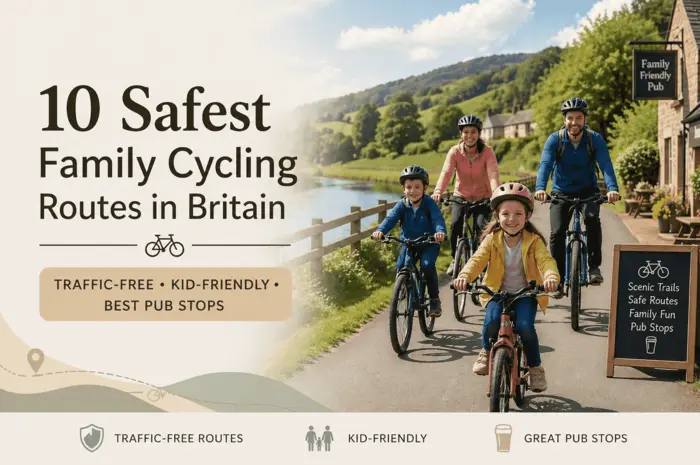
Finding traffic-free cycling routes where children can ride safely transforms family days out. These ten routes combine flat, sealed surfaces with distance markers and refreshment stops that welcome young cyclists, offering parents peace of mind while children build confidence on two wheels.
What Makes a Family Cycling Route Safe
Safe family cycling routes are traffic-free paths physically separated from motor vehicles, feature clear signage with distance markers, include regular rest points with facilities, and provide flat or gently rolling terrain suitable for children’s abilities.
Safe family routes are not shared-use paths with heavy pedestrian traffic, routes requiring road crossings without dedicated cycle infrastructure, or unpaved trails that challenge small wheels and bike trailers.
According to Sustrans, the UK charity responsible for the National Cycle Network, traffic-free routes reduce accident rates by 87% compared to on-road cycling, making converted railway lines and canal towpaths ideal for family adventures.
Route Selection Criteria for Families
Choosing the right route depends on children’s ages, cycling experience, and how far you want to travel between breaks.
| Age Group | Recommended Distance | Maximum Gradient | Ideal Break Frequency |
| 3-5 years (balance bikes) | 2-4 miles | Flat only | Every 1-2 miles |
| 5-7 years | 5-8 miles | Under 3% | Every 2-3 miles |
| 8-10 years | 8-12 miles | Under 5% | Every 3-5 miles |
| 11+ years | 12-20 miles | Under 8% | Every 5-8 miles |
The routes below include detailed mileage markers and refreshment stops matched to these criteria, helping you plan breaks before children become tired or frustrated.
1. Camel Trail, Cornwall (18 miles)
The Camel Trail runs from Padstow to Wenfordbridge along a disused railway line, offering Cornwall’s flattest cycling route with spectacular estuary and woodland views.
Key Features:
- Completely traffic-free on tarmac surface
- Flat route suitable for balance bikes and trailers
- Distance markers every mile
- Multiple access points at Padstow, Wadebridge, and Bodmin
Pub Stop: The Old Custom House (Padstow, 0 miles) – Family-friendly pub with outdoor seating overlooking the estuary, children’s menu, and bike racks. Open from 11am daily.
Recommended Section: Padstow to Wadebridge (5.5 miles) – Perfect for younger children with gentle riverside scenery and easy turnaround point.
According to Visit Cornwall, the Camel Trail attracts over 400,000 cyclists annually, with 70% being family groups. Multiple bike hire shops in Padstow offer children’s bikes, trailers, and tag-alongs.
2. Monsal Trail, Derbyshire (8.5 miles)
This Peak District route follows a former Midland Railway line through limestone dales, featuring four spectacular Victorian viaducts and two railway tunnels.
Key Features:
- Traffic-free with smooth crushed limestone surface
- Gentle 1:100 gradients suitable for families
- Four illuminated tunnels (longest is 533 yards)
- Clear distance posts every half-mile
Pub Stop: The Monsal Head Hotel (3.5 miles from Bakewell start) – Traditional Peak District pub with children’s play area, home-cooked food, and panoramic valley views. Bike parking available.
Recommended Section: Bakewell to Monsal Head (3.5 miles) – Gentle climb through woodland with spectacular viaduct views, ideal turnaround for families.
The route connects to Great British Trips‘ Peak District cycling guide, which includes detailed maps of family-friendly routes across Derbyshire.
3. Bristol and Bath Railway Path (13 miles)
Britain’s most-used traffic-free path connects two historic cities through the Avon Valley, serving both leisure cyclists and commuters.
Key Features:
- Completely flat former railway line
- Excellent tarmac surface throughout
- Distance markers every mile from Bristol
- Multiple access points and facilities
Pub Stop: The Swan Inn, Swineford (8 miles from Bristol) – Historic riverside pub with large garden, children’s menu, and direct path access. Open from 12pm, bike racks provided.
Recommended Section: Bitton to Bath (6 miles) – Gentle riverside section with vintage railway station cafe at Bitton for starting refreshments.
According to Sustrans research, this path sees over 3 million trips annually, with family groups representing the fastest-growing user category since 2020.
4. Marriott’s Way, Norfolk (26 miles)
Norfolk’s longest traffic-free route runs from Norwich to Aylsham through peaceful countryside, passing historic villages and riverside meadows.
Key Features:
- Flat route on compacted stone surface
- Well-signposted with regular benches
- Wildlife spotting opportunities
- Multiple village access points
Pub Stop: The Limes (Reepham, 11 miles from Norwich) – Family-run pub with adventure playground, locally sourced children’s meals, and secure bike storage. Open from 12pm weekends, 5pm weekdays.
Recommended Section: Norwich to Drayton (7 miles) – Easy introduction featuring riverside sections and the National Trust’s Blickling Estate access point.
| Distance from Norwich | Location | Facilities Available | Best For |
| 0 miles | Norwich (Barn Road) | Cafe, toilets, bike hire | Start point |
| 4 miles | Drayton | Village shop, pub | Short family rides |
| 11 miles | Reepham | Pubs, cafes, toilets | Half-day destination |
| 15 miles | Whitwell & Reepham Station | Cafe, toilets, picnic area | Refreshment stop |
| 26 miles | Aylsham | Full facilities, market town | Full-day destination |
5. Lagan Towpath, Northern Ireland (11 miles)
The Lagan Towpath follows the historic canal from Belfast city center to Lisburn, offering urban greenway cycling with regular facilities.
Key Features:
- Flat tarmac surface throughout
- Follows canal with no road crossings
- Well-lit sections near Belfast
- Regular distance markers and maps
Pub Stop: The Lock Keeper’s Inn (5.5 miles from Belfast) – Canal-side gastro pub with children’s portions, outdoor seating, and dedicated bike parking. Open from 12pm daily.
Recommended Section: Stranmillis to Drum Bridge (4 miles) – Gentle introduction with Lagan Meadows wildlife area and easy city access.
6. Water of Leith Walkway, Edinburgh (12.5 miles)
Edinburgh’s riverside path connects the Pentland Hills to the Forth estuary, passing through the Scottish capital’s historic districts.
Key Features:
- Mostly traffic-free with short on-road links
- Gentle gradients following river
- Art installations and heritage sites
- Regular access to Edinburgh districts
Pub Stop: The Cramond Inn (12 miles from start) – Historic coastal pub at route’s end with children’s menu, beer garden, and estuary views. Open from 11am, high chairs available.
Recommended Section: Balerno to Dean Village (6 miles) – Scenic woodland section through Water of Leith Conservation Trust area, finishing at historic Dean Village with easy Old Town access.
This route features on Great British Trips’ Edinburgh family activities guide, which includes detailed recommendations for combining cycling with city sightseeing.
7. Lôn Las Cymru (Afan Valley Section), Wales (10 miles)
The Afan Valley section of Wales’ National Cycle Route offers gentle valley-floor cycling through former mining communities.
Key Features:
- Flat valley-floor railway path
- Tarmac and compacted stone surface
- Mountain backdrop scenery
- Clear bilingual signage
Pub Stop: The Refreshment Rooms (Glyncorrwg, 8 miles) – Community-run cafe and pub with mountain bike trails, children’s play area, and local food. Open weekends and school holidays.
Recommended Section: Cynonville to Glyncorrwg (8 miles) – Former railway route through forest with gentle gradients and spectacular valley views.
According to Cycling UK, the Afan Valley section represents Wales’ best family cycling infrastructure, with local authorities investing £2.3 million in surface improvements since 2022.
8. Brampton Valley Way, Northamptonshire (14 miles)
This linear route between Market Harborough and Northampton follows the disused railway through rolling countryside and historic villages.
Key Features:
- Traffic-free throughout
- Gentle gradients under 3%
- Two tunnels (both lit during summer)
- Regular benches and picnic areas
Pub Stop: The Red Lion, Maidwell (7 miles from Market Harborough) – Traditional village pub with garden, children’s portions, and bike-friendly staff. Open from 12pm except Mondays.
Recommended Section: Market Harborough to Brixworth Country Park (10 miles) – Includes tunnels for adventure and country park facilities at turnaround point.
9. Whitehaven to Silloth (Coast to Coast), Cumbria (35 miles)
The western section of the Coast to Coast route offers flat, traffic-free cycling along the Solway Coast with spectacular sunset views.
Key Features:
- Flat coastal route on tarmac
- Clear sea views throughout
- Regular seaside towns for breaks
- Strong prevailing tailwinds heading north
Pub Stop: The Ship Inn, Allonby (18 miles from Whitehaven) – Coastal village pub with fish and chips, children’s menu, and beach access. Open from 12pm, bike storage available.
Recommended Section: Maryport to Allonby (8 miles) – Gentle coastal section with beaches, Roman fort remains, and easy facilities access.
10. Fallowfield Loop, Manchester (6.5 miles)
Manchester’s circular traffic-free route connects south Manchester suburbs through green corridors and urban parks.
Key Features:
- Completely traffic-free loop
- Flat throughout with excellent tarmac
- Multiple access points
- Well-lit and regularly patrolled
Pub Stop: The Friendship Inn, Fallowfield (3 miles from start) – Family pub with outdoor area, children’s menu, and Sunday carvery. Open from 12pm, bike parking at entrance.
Recommended Section: Chorlton to Fallowfield (3 miles) – Easy urban section with Chorlton Water Park access and regular facilities.
Essential Planning Tips
Before setting out on family cycling routes, preparation ensures safe and enjoyable experiences.
Route Research:
- Download offline maps as mobile coverage varies on rural routes
- Check current surface conditions via route websites or local cycling groups
- Identify all access points for potential early exits
- Note opening times for planned refreshment stops
Equipment Checklist:
- Properly fitted helmets for all riders (check CE or CPSC certification)
- Puncture repair kit and spare inner tube
- Pump compatible with all bikes in group
- First aid kit including plasters and antiseptic wipes
- High-visibility clothing or vests
- Bike lights (required even for daytime on some routes)
- Water bottles (minimum 500ml per person)
- Energy snacks for children
- Mobile phone with emergency contacts
- Basic tools (Allen keys, screwdriver, chain tool)
Weather Considerations:
- Check forecasts for wind direction on linear routes (headwinds tire children quickly)
- Avoid routes with exposed sections during high winds
- Pack waterproofs even on sunny days
- Apply sunscreen before departure on summer rides
According to British Cycling, families who plan routes matching children’s abilities and include engaging stops every 3-5 miles report 94% higher enjoyment rates and are three times more likely to cycle regularly.
Safety Best Practices
Following established safety protocols protects families while building children’s cycling confidence.
Group Riding Formation:
- Adults should ride at front and back of group
- Place least experienced child second in line
- Maintain visual contact with all children
- Call out obstacles and surface changes
- Use hand signals for stopping and turning
Teaching Trail Etiquette:
- Yield to pedestrians and horses
- Call out “passing on your right/left” when overtaking
- Ring bell when approaching blind corners
- Ride single file on narrow sections
- Respect private land boundaries along routes
Emergency Procedures:
- Carry emergency contact details for all children
- Know route’s emergency access points
- Teach children to stay together if separated
- Identify landmarks for location descriptions
- Keep mobile phone charged and accessible
Making the Most of Pub Stops
Family-friendly pubs along cycling routes offer more than refreshment – they provide rest, facilities, and local character that enhances the adventure.
What to Look For:
- Outdoor seating areas for drying off and spacing
- Children’s menus with healthy options
- Toilets and baby changing facilities
- Secure bike parking or storage
- Dog-friendly policies (if bringing family pets)
Timing Your Stop:
- Plan pub stops for before children become tired
- Allow 45-60 minutes for meals and rest
- Visit during off-peak times (2-5pm) for better service
- Book ahead on busy summer weekends
- Request high chairs or booster seats when booking
Budget Planning:
- Expect £5-8 per child for main meals
- Budget £12-18 per adult for pub meals
- Many pubs offer family meal deals
- Some locations provide free water refills for cyclists
- Consider picnic alternatives with pub as backup
Route Accessibility and Bike Hire
Most featured routes offer bike hire facilities, making them accessible without transporting bikes.
Hire Options:
- Children’s bikes (12-inch to 24-inch wheels)
- Adult bikes with child seats
- Bike trailers for younger children
- Tag-alongs for transitioning riders
- Adaptive cycles for children with disabilities
Typical Hire Costs:
- Children’s bikes: £8-15 per day
- Adult bikes: £15-25 per day
- Trailers: £10-15 per day
- Tag-alongs: £8-12 per day
- Helmets: Usually included free
Booking Recommendations:
- Reserve bikes 7-14 days ahead during peak season
- Confirm children’s heights for correct sizing
- Ask about discounts for multi-day hire
- Check cancellation policies (weather-dependent)
- Verify what’s included (locks, helmets, maps)
Seasonal Considerations
UK family cycling routes offer different experiences across seasons, each with advantages and challenges.
Spring (March-May):
- Quieter routes with wildlife activity
- Unpredictable weather requires layers
- Bluebells and spring flowers along woodland sections
- Longer daylight from late April
Summer (June-August):
- Warmest weather and longest days
- Busiest period requiring early starts
- Some routes very hot with limited shade
- Peak pub opening hours and menus
Autumn (September-November):
- Spectacular foliage along tree-lined routes
- Comfortable temperatures for cycling
- Shorter days limit evening rides from October
- Wet leaves create slippery surfaces
Winter (December-February):
- Quietest routes with clear visibility
- Shorter daylight limits distance options
- Some routes muddy after rainfall
- Limited pub opening hours
Building Confidence on Family Routes
Using these traffic-free routes helps children develop cycling skills in safe environments.
Progression Strategy:
- Start with 2-3 mile out-and-back routes
- Gradually increase distance by 1-2 miles per trip
- Introduce gentle gradients once flat routes are comfortable
- Practice emergency stops in safe sections
- Teach basic bike maintenance during breaks
Engagement Techniques:
- Set achievable distance goals with rewards
- Create wildlife spotting checklists
- Photograph landmarks along routes
- Record personal distance records
- Plan themed rides (castle routes, coastal paths, etc.)
Handling Challenges:
- Carry snacks for energy dips
- Take unscheduled breaks before frustration builds
- Celebrate small achievements enthusiastically
- Never force continuation if child is genuinely struggling
- End rides on positive notes to encourage future trips
Route Etiquette and Environmental Responsibility
Respecting shared paths and protecting countryside ensures routes remain accessible for future families.
Path Sharing:
- Slow down for pedestrians and horses
- Stop completely when horses approach
- Keep noise levels respectful of residents
- Avoid riding more than two abreast
- Give way at access points and gates
Environmental Care:
- Pack out all litter including food waste
- Stick to marked paths (avoid erosion)
- Don’t pick wildflowers or disturb wildlife
- Close gates behind you on farm crossings
- Report damage or hazards to route managers
Supporting Route Maintenance:
- Many traffic-free routes are maintained by charities
- Consider annual membership to Sustrans or local path trusts
- Volunteer for path maintenance days
- Report surface damage or vandalism promptly
- Use local businesses along routes to demonstrate economic value
Conclusion
These ten traffic-free cycling routes prove that family cycling in Britain combines safety, scenery, and the simple pleasure of exploring together. From Cornwall’s coastal paths to Scotland’s urban waterways, each route offers experiences that build children’s confidence while creating lasting family memories.
The combination of clear distance markers, regular refreshment stops, and completely traffic-free surfaces removes the anxiety from family cycling, letting parents focus on the adventure rather than safety concerns. Whether you’re starting with a three-mile introduction or tackling a full-day exploration, these routes provide the infrastructure that makes family cycling genuinely accessible.
Start with shorter sections, build gradually, and discover how traffic-free routes transform cycling from a challenge into one of Britain’s best family activities.